
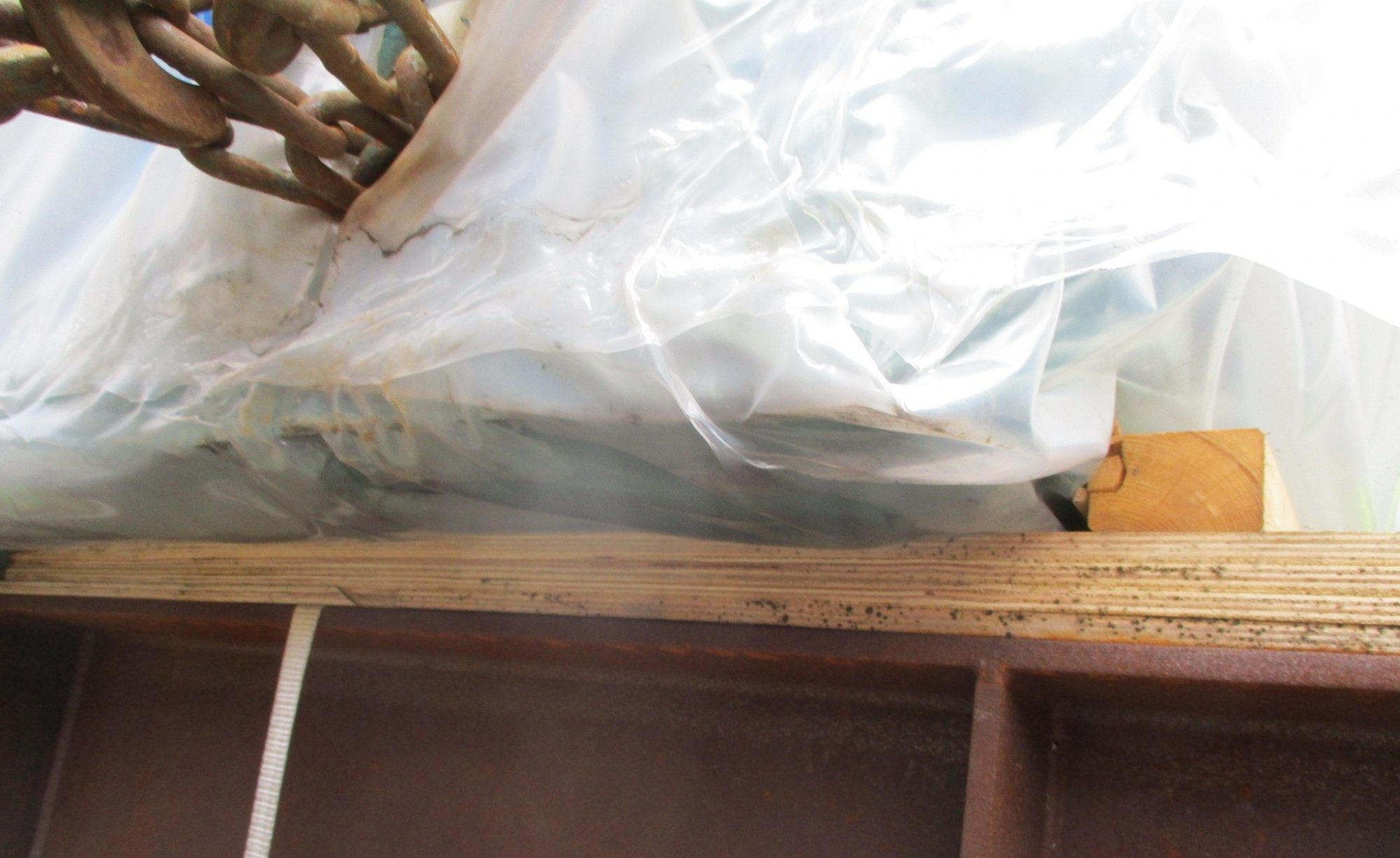
When onboard recently for another matter, as marine warranty surveyors we felt the need to highlight some issues to the port captain, regarding the project cargo lashing and securing that we had seen onboard.
We noted that multiple layers of plywood had been used between the unit and the steel stools, which is often wax coated with the frictional coefficient of plywood against plywood, can be as low as 0.3.
We also noted multiple layers of polyethylene sheeting used between the unit and the plywood upon the steel stool, which with polyethylene against polyethylene, can have a coefficient of friction as low as 0.14.
Why is this important, the lashing designer had used 0.5 as a generic coefficient of friction in order to design the lashing plan, however, with the actual frictional coefficients much lower than this due to the plywood/plywood (0.3) contact and the polyethylene/polyethylene (0.14) contact. The lashings applied would not have been sufficient to overcome the lack of friction in the lashing plan, and would be under increased duress during the vessel’s pitching, rolling, and heaving reactions to the seas experienced.
Nevertheless, we advised the port captain of the issue which was rectified by adding nails/bolts to the multiple layers of plywood to add shear strength and/or replacing with a single timber section, together with cutting and stripping out the multiple layers of polyethylene sheeting in way of the foot contact with the timber surface of the stools, to allow steel against timber contact.
Post re-calculation, safe lashing and securing of the project cargo components was restored in association with the Code of Safe Practice for Cargo Stowage and Securing.